Uma Flores · 11 September 2026
The Interplay Between Geography and Artisan Practices in Remote Valley Communities
Geography determines the materials, techniques, and transmission methods that define artisan practices across remote valley communities worldwide, where steep terrain, river systems, and seasonal climate patterns restrict access to external resources while concentrating local raw materials like specific clays, woods, and fibers. Researchers have documented these patterns through field studies in multiple regions, noting that isolation creates distinct craft traditions tied directly to available geology and hydrology rather than broader market trends.
Material Availability Shaped by Terrain and Resources
Valley floors and slopes supply the primary inputs for crafts, with communities in the Andes relying on high-altitude grasses and clay deposits formed by glacial activity, whereas those in the European Alps utilize coniferous woods and stone from moraine deposits. Data from geological surveys indicate that river erosion exposes mineral veins used in metalwork and pigments, limiting options to what local bedrock provides. Observers note that artisans adapt tools and methods to these constraints, producing items with consistent regional signatures visible in archaeological records spanning centuries.
Climate Influences on Production Cycles
Seasonal weather patterns dictate work schedules and preservation techniques, as heavy snowfalls in northern valleys halt outdoor activities for months while monsoon rains in southern valleys affect drying processes for textiles and pottery. Studies conducted by research institutions show that artisans time harvests of natural dyes and fibers to align with dry periods, ensuring workable conditions without modern climate control. This synchronization appears in production logs from multiple sites, where output volumes correlate with recorded temperature and precipitation data.
Isolation and Knowledge Transmission
Limited road access and high passes reduce contact with distant markets, which preserves specialized skills passed through family lines or community apprenticeships rather than formal education systems. Evidence from ethnographic records reveals that techniques for specific weaving patterns or carving motifs remain localized because geographic barriers slow the spread of innovations from urban centers. In September 2026, updated satellite mapping projects by international geography organizations highlighted how valley connectivity levels continue to correlate with the retention of pre-industrial craft methods in several test regions.
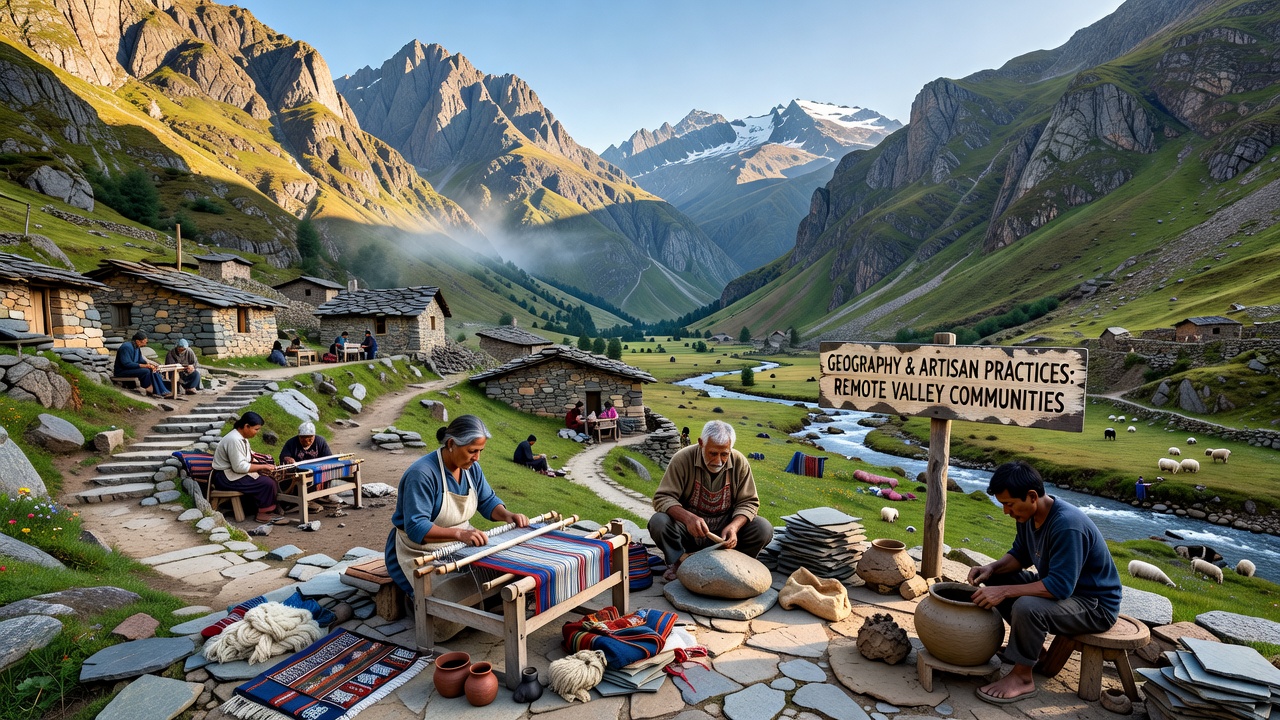
Trade routes along valley rivers once carried finished goods to lowland areas, yet the same waterways also introduced occasional new materials that blended with established practices, creating hybrid forms documented in museum collections. Those who've examined trade records from the 19th and 20th centuries observe that volume and variety of exchanged items stayed proportional to pass accessibility during summer months.
Regional Examples Across Continents
Communities in the Canadian Rockies developed basketry from specific willow species thriving in riverine soils, while Australian highland valleys feature stone tool traditions adapted to quartzite outcrops. Reports from the International Geographical Union link these adaptations to elevation gradients that control vegetation zones. Similar patterns emerge in East African rift valleys, where volcanic soils supply clays for pottery fired at temperatures achievable only with local fuel woods.
Academic analyses from university geography departments across North America and Europe confirm that soil composition and water availability directly influence the durability and aesthetic qualities of finished artisan products. Figures from these studies show measurable differences in tensile strength of fibers grown at varying altitudes, which artisans account for through adjusted spinning or plaiting methods.
Contemporary Adaptations and Data Trends
Recent infrastructure improvements in some valleys have introduced limited external materials, yet core practices retain geographic markers because artisans continue sourcing primary inputs locally to maintain quality standards recognized in export markets. Government statistical agencies in several countries track these shifts through annual craft production surveys, revealing stable correlations between terrain features and material choices despite gradual connectivity gains.
One study revealed that communities maintaining stricter geographic separation preserved a higher percentage of original techniques compared with those near new roads, according to longitudinal data compiled by research networks focused on cultural landscapes. This pattern holds across examined sites regardless of cultural background.
Conclusion
Geography continues to anchor artisan practices in remote valley communities through direct control over materials, environmental conditions, and interaction frequencies that shape skill development and product characteristics. Ongoing documentation by academic and governmental bodies provides quantitative backing for these relationships, with datasets updated regularly to reflect any changes in terrain accessibility or resource distribution.